A small home can start to feel heavy long before it actually runs out of space. It happens quietly. A few extra things land on the dining table. Shoes gather near the door. The bathroom counter becomes a place for everything you use in a hurry. The bedroom chair turns into a second closet. And suddenly, the home you wanted to feel calm begins to feel busy, even when it is clean. But here is the softer truth: your home is not too small. It may simply be asking for better decisions. Small-space living is not about hiding every object or forcing your rooms to look empty. A beautiful small home still has texture, warmth, personality, and real life inside it. The difference is that every piece needs to work a little harder. A bench can hold blankets. A shelf can lift everyday items off the floor. A bedside table can create order beside the bed. A basket can turn visual clutter into something intentional. Even one quiet corner can change the way an entire room feels. The goal is not to make your home look bigger for a photo. The goal is to make it feel easier to live in. In this guide, we will walk through small-space storage ideas that are practical, modern, and beautiful enough to belong in a calm home. You will see how to use vertical space, choose furniture with hidden purpose, soften clutter with styling, and create simple storage zones that make daily life feel lighter. Because a home does not need more square footage to breathe. Sometimes, it just needs a better rhythm.
1.Start With the Spaces That Feel Visually Loud
Before you buy another storage bin or start pulling everything out of a closet, stand at the entrance of your room for a moment.
Do not look for what is messy.
Look for what feels loud.
In a small home, clutter is not always about how many things you own. Sometimes, it is about where those things are sitting. A room can be freshly cleaned and still feel busy if the coffee table is covered, the kitchen counter has no clear space, the entryway has shoes and mail waiting, or the bedside table is holding every small thing from the day.
These are the spaces your eyes touch first. And in a small room, the eye does not have far to travel. One crowded surface can make the whole home feel tighter than it really is.
That is why the first step is not a full-home reset. It is a visual reset.
Start with the surfaces that speak the loudest. Clear the coffee table. Edit the bathroom counter. Give the entryway a small place for keys. Remove anything from the nightstand that does not belong to your evening or morning routine. This simple shift can change the feeling of the room faster than reorganizing a drawer no one sees.
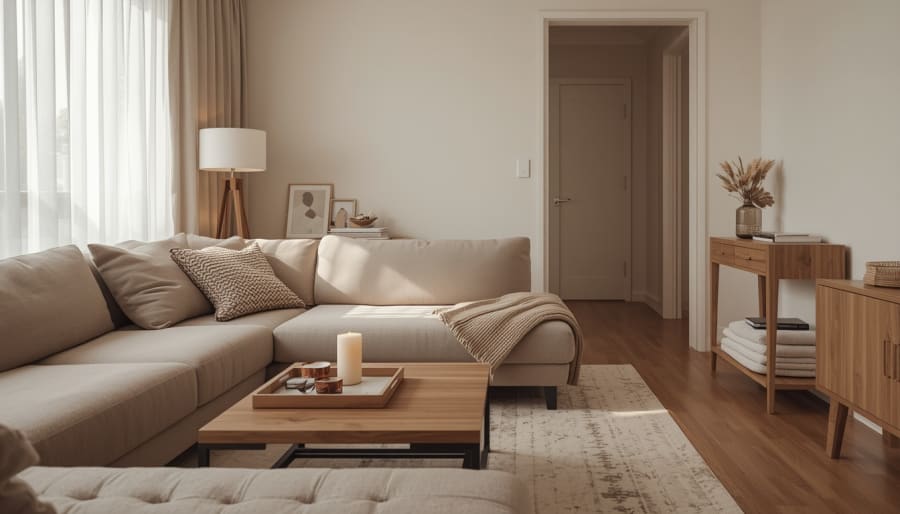
The goal is not to make your home look empty. A calm home still has life in it. A book on the table, a candle near the sofa, a throw blanket within reach, a small dish for keys — these things can make a space feel warm and human. The difference is that they need a place to land.
This is where small “landing zones” become powerful.
Use ceramic tray on the coffee table so the candle, remote, and current book feel collected instead of scattered. Place a woven basket beside the sofa for throws or kids’ items. Keep a small dish or slim tray near the door for keys and sunglasses. Add a drawer organizer inside the vanity so daily products do not keep returning to the counter.
These are small choices, but they create a quiet rhythm. The home stops feeling like everything is waiting to be handled.
A small space begins to feel bigger when your most visible areas stop asking for attention.
2.Use Vertical Space Before You Use Floor Space
In a small home, the floor disappears fast.
One extra basket becomes two. A small cabinet turns into another surface to style. A side table gets added for convenience. Then maybe a storage cart. And before long, the room is technically more organized, but it also feels tighter, heavier, and harder to move through.
That is the quiet mistake many people make in small spaces: they solve storage by filling the room from the bottom up.
A better small-space mindset is to look up first.
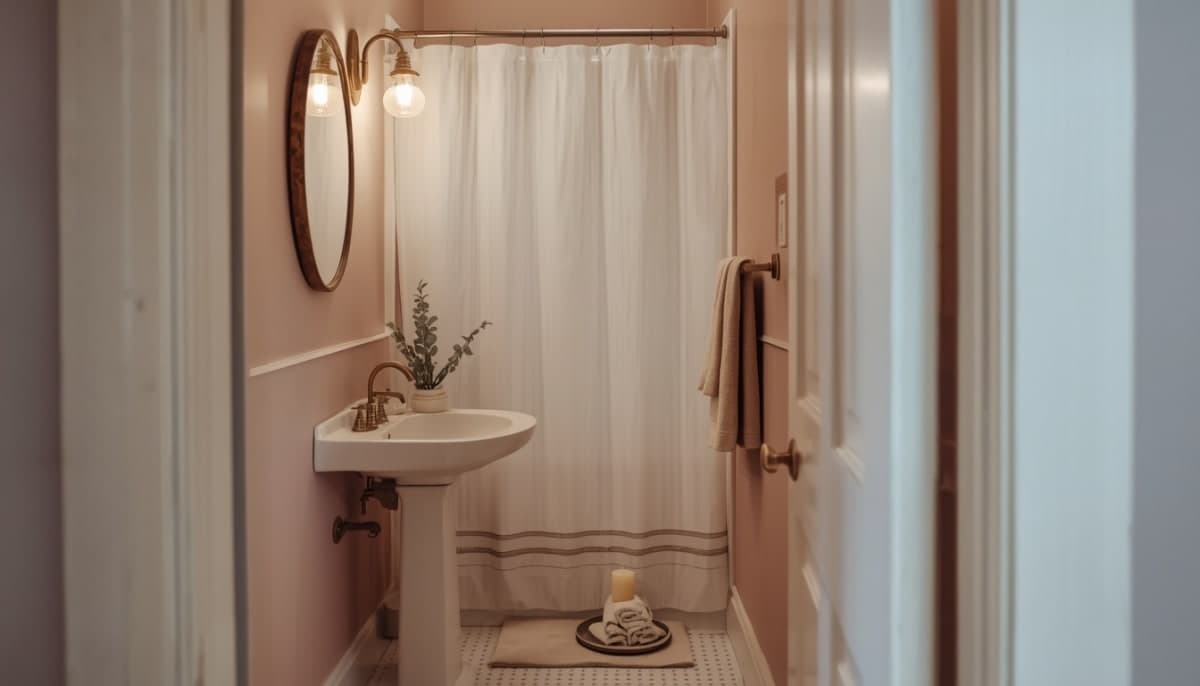
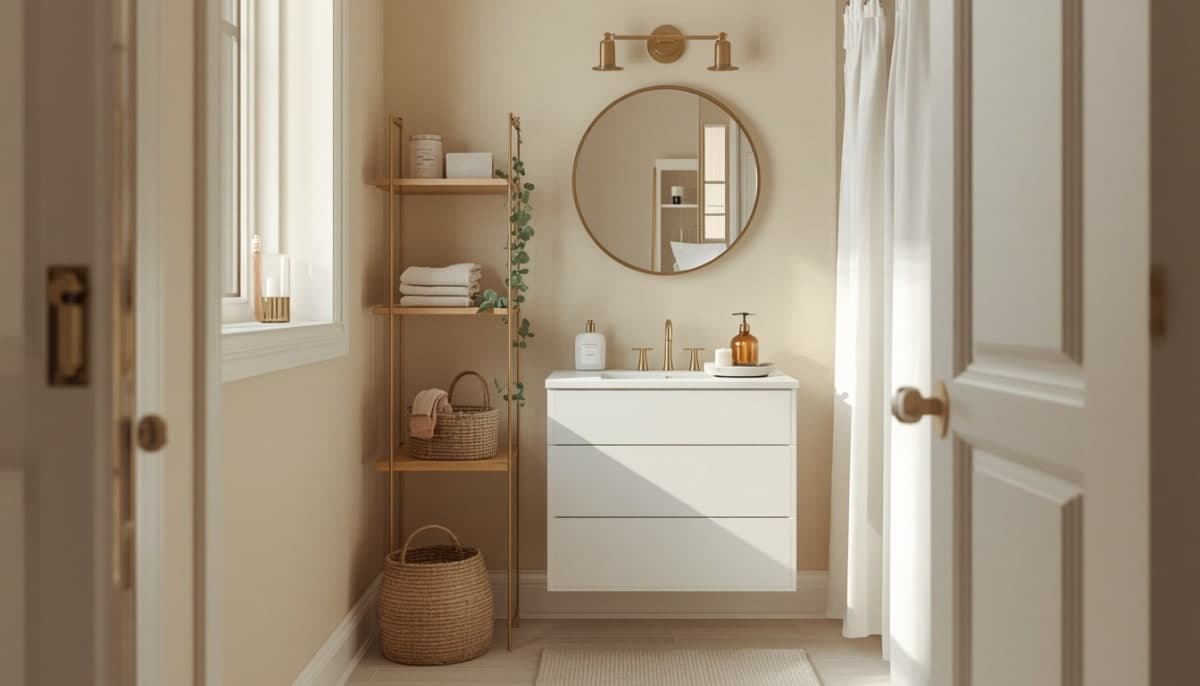
Walls can do far more than hold art. In a compact home, they can become some of your most useful storage space. A floating shelf above a desk can hold books and daily essentials without crowding the floor. A narrow shelf in the bathroom can keep towels and skincare off the counter. Hooks near the entry can replace a bulky standing rack. Even a small bedroom can feel lighter when a wall-mounted shelf or floating nightstand does the job of a heavier furniture piece.
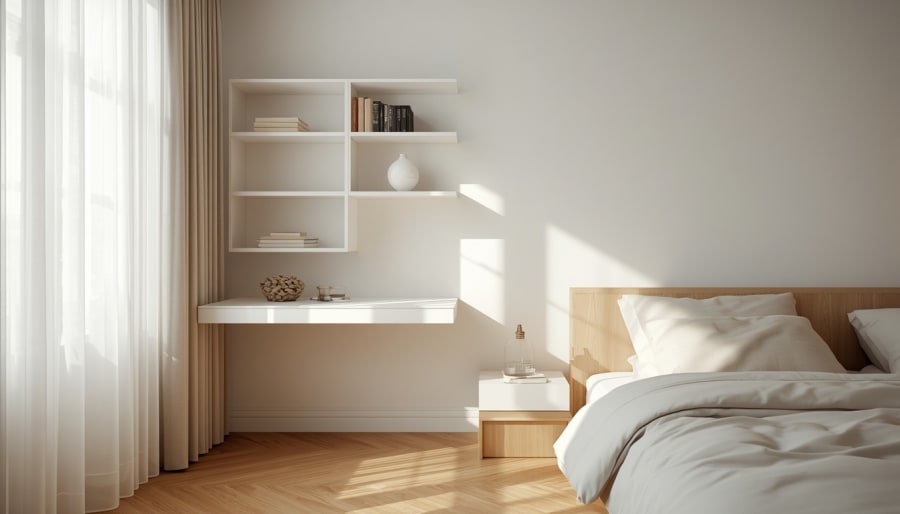
This is one of the easiest ways to make a room feel more open without losing function.
When the floor stays clear, the room immediately feels calmer. There is more visual breathing room. The layout feels easier. The eye can move through the space without stopping at too many objects. In small apartments especially, that open feeling matters just as much as the storage itself.
But there is also an important balance here.
Vertical storage only works beautifully when it stays edited. If every wall shelf is packed too tightly, the room starts to feel visually crowded again. The goal is not to turn your walls into storage overload. The goal is to lift the right things off the floor and give them a clean, intentional home.
A good rule is this: let each shelf hold a mix of purpose and breathing room.
Maybe that looks like a few neatly stacked books, a ceramic vase, and one open pocket of space. Maybe it is folded towels, a candle, and a basket for smaller items. Maybe it is everyday kitchen pieces arranged in a way that feels useful, not busy.
That is why floating wall shelves work so well in small homes. They offer practical storage, create visual height, and help a room feel more designed rather than more crowded. In a bedroom, bathroom, workspace, or even a narrow dining corner, they can add function without asking the room to give up more floor area.
Sometimes the smartest storage choice is not the one that holds the most.
It is the one that helps the room keep breathing.
3.Choose Furniture That Works Twice
In a small home, every piece of furniture should earn the space it takes.
That does not mean your home has to feel practical in a cold way. A small room can still feel soft, layered, beautiful, and personal. But when square footage is limited, the best pieces are the ones that quietly do more than one job.
A coffee table can hold a tray and hide remotes.
A bench can finish the end of the bed and store extra blankets.
A nightstand can carry a lamp while keeping chargers out of sight.
A platform bed can hold seasonal bedding without needing another dresser.
A slim console can create an entryway moment without taking over the wall.
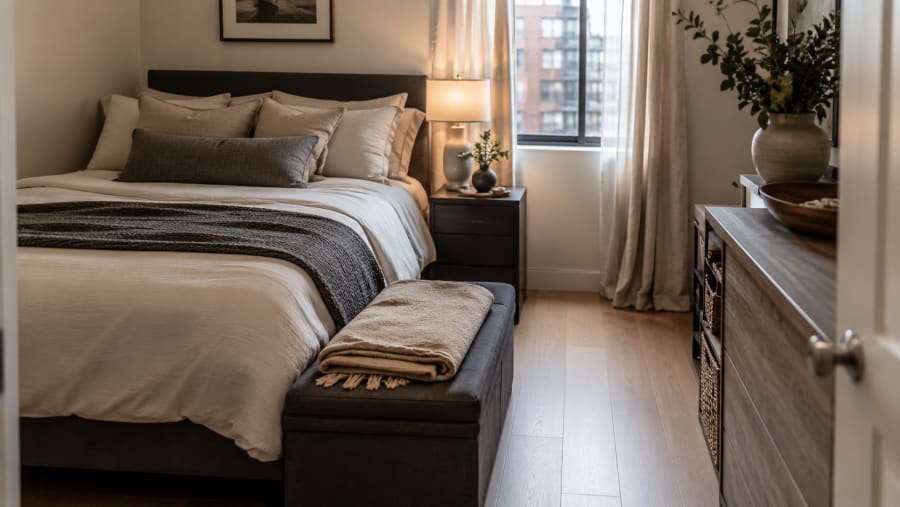
This is where small-space decorating becomes smarter than simply adding more storage.
Because the wrong furniture can make a small room feel crowded even when it looks stylish. A beautiful chair that only collects clothes becomes visual stress. A side table with no drawer becomes another clutter surface. A large cabinet may hide things well, but it can also make the room feel heavier than before.
The better question is not, “Do I have enough furniture?”
The better question is, “Is this piece helping the room live better?”
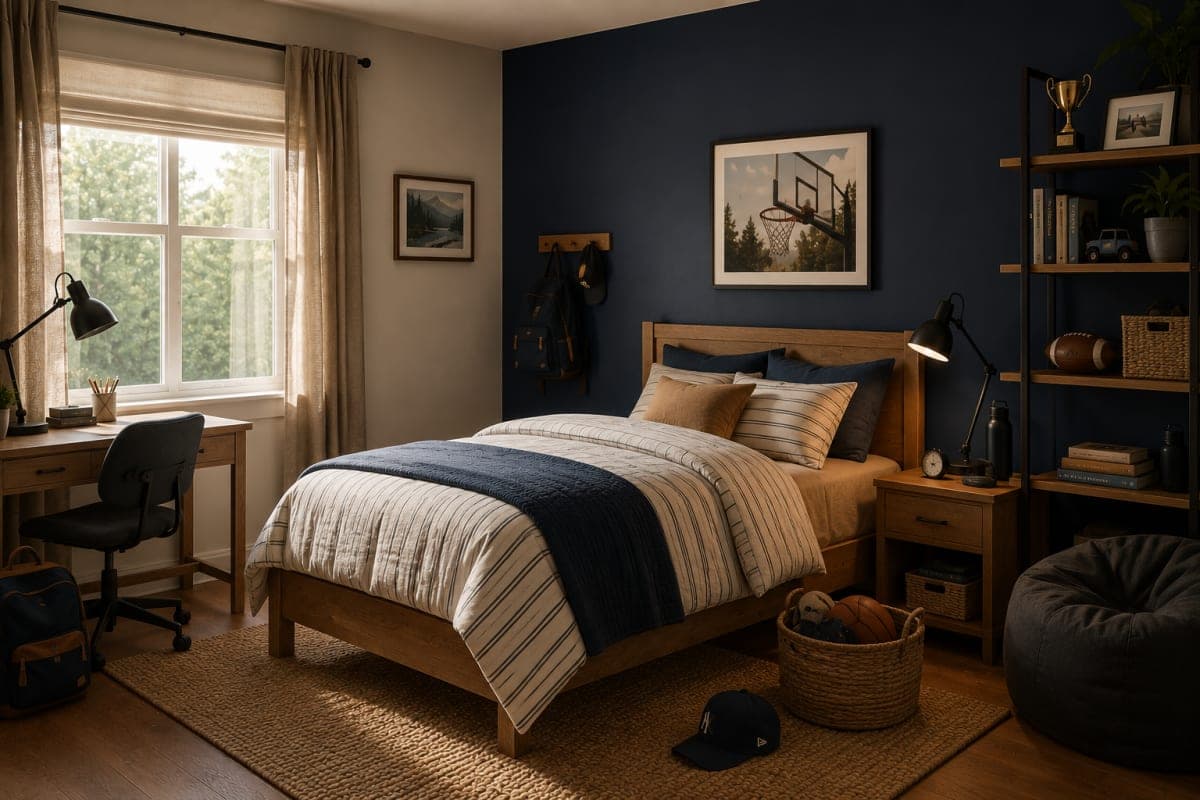
A small bedroom is the perfect place to use this idea. The bed already takes up the largest part of the room, so everything around it needs to be intentional. If extra pillows, blankets, books, or daily clothing always end up on a chair, the room is telling you something. It does not need another surface. It needs a better home for repeated habits.
This is why a storage bench or ottoman can be such a useful small-space upgrade. It gives the room a finished, styled look, but it also creates hidden storage for the things that usually stay visible.If one chair in your bedroom keeps turning into a pile of blankets, clothes, or extra pillows, a storage ottoman bench can turn that habit into a cleaner, more intentional system.
Extra bedding, folded throws, off-season pillows, kids’ items, or evening clothes can be tucked away instead of sitting in the open.
And visually, that matters.
When clutter is hidden inside a piece that already belongs in the room, the space feels calmer without feeling stripped down. You are not removing comfort. You are giving comfort a cleaner place to live.
A storage ottoman bench works especially well at the foot of a bed, under a window, near an entryway, or beside a sofa in a compact living room. It can act as seating, storage, and styling all at once — which is exactly what small homes need.
A small room does not always need smaller furniture.
Sometimes it needs furniture with more purpose.
4.Build a Calm Bedroom Storage System
A small bedroom should not feel like the place where everything gets dropped at the end of the day.
It should feel like the room that helps you exhale.
But in small homes, the bedroom often becomes the quiet hiding place for things that do not have a proper home yet. Laundry lands on the chair. Extra pillows stay on the floor. Chargers wrap around the nightstand. Skincare, books, glasses, hair clips, receipts, and small everyday items slowly gather beside the bed.
Nothing looks terrible on its own.
But together, these little pieces start to steal the calm from the room.
The best way to organize a small bedroom is not to begin with the closet. Start with the bed zone, because that is what your eyes see first and last every day. When the area around the bed feels calm, the whole bedroom feels more restful.
Begin with the nightstand.
A nightstand should support your routine, not hold your entire day. Keep only what belongs to the evening or morning: a lamp, one book, a glass of water, a small tray, maybe your current skincare or sleep spray if you use it every night. Everything else needs to move into a drawer, basket, or nearby storage spot.
This is where a bedside storage table can make a small room feel much more controlled. A piece with a drawer, shelf, or hidden space lets you keep the top surface calm while still keeping your real-life essentials close. The surface stays styled. The routine stays easy. The clutter has somewhere to disappear.
Then look under the bed, but be careful.
Under-bed storage can be helpful, but it should not become a secret clutter basement. Use it only for categories that make sense: extra bedding, seasonal blankets, off-season clothes, or guest linens. Keep the storage simple, labeled, and easy to pull out. If you forget what is under there, the system is already too full.
The end of the bed can also work harder in a small room. A slim bench, storage ottoman, or folded blanket moment can make the bedroom feel finished without adding visual chaos. The key is to choose one piece that serves a purpose, not another surface that collects random things.
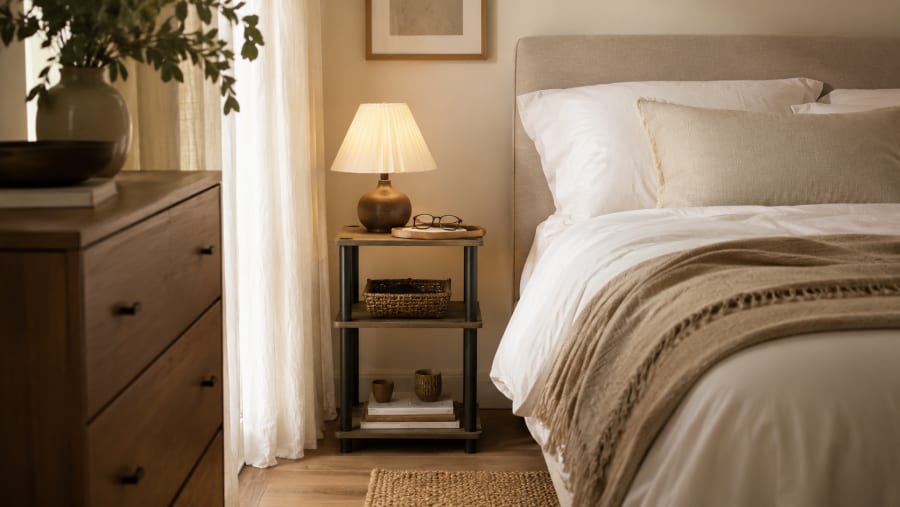
A calm bedroom is built through small boundaries.
The nightstand is not for everything.
The chair is not a closet.
The floor is not storage.
The bed is not a holding zone.
When each repeated habit has a quiet place to return to, the bedroom starts to feel softer. Not empty. Not staged. Just easier.
And in a small home, that ease is what makes the room feel bigger.
5.Make the Kitchen Work in Layers
A small kitchen does not become calm by hiding everything.
It becomes calm when everything has the right level of access.
This matters because a kitchen is different from a bedroom or living room. It is not just a room you look at. It is a room you use again and again throughout the day. Coffee in the morning. Lunch prep. Dishes. Snacks. Cleaning. Dinner. A glass of water before bed. In a small kitchen, every routine leaves something behind if the space is not designed to catch it.
That is why the best small-kitchen storage system works in layers.
The first layer is what you use every day.
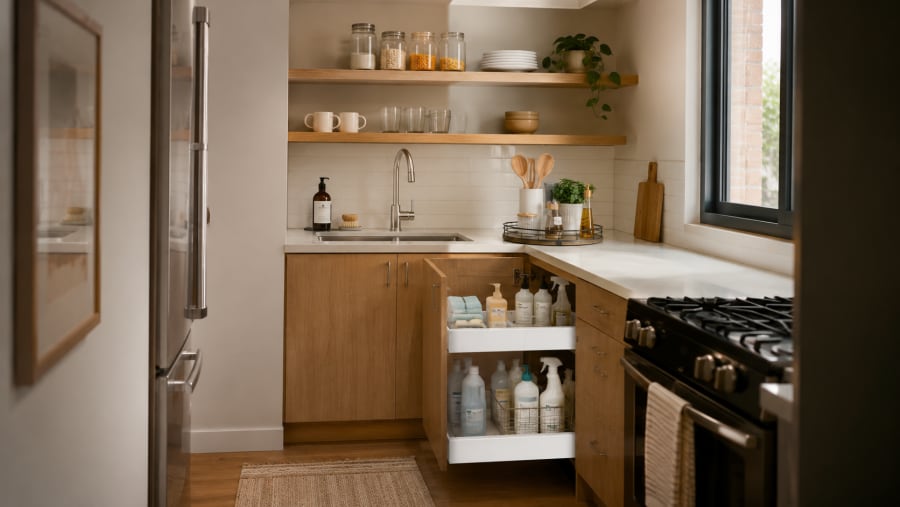
These items should be easy to reach, but they should still look intentional. A wooden tray can hold olive oil, salt, and a small utensil jar. A coffee corner can live on one compact part of the counter instead of spreading across the whole surface. A few everyday mugs or plates can sit on an open shelf if they match the room’s calm mood.
The second layer is what you use often, but not constantly.
These pieces belong inside cabinets where they are still easy to reach: extra dishes, pantry refills, mixing bowls, food containers, baking items, cleaning cloths, or backup supplies. This is where cabinet shelves, risers, clear bins, and drawer dividers make a big difference. They stop deep storage from becoming a place where things disappear.
The third layer is what you rarely use.
Holiday serving pieces, extra appliances, special baking tools, or backup items should not compete with your daily routine. Move them higher, deeper, or into another storage zone if your kitchen is very limited. A small kitchen feels stressful when rare-use items are taking prime space from the things you touch every day.
Then there is the hidden layer — the one most people avoid.
Under the sink.
This space can quietly become the messiest part of a small kitchen. Cleaning sprays fall over. Sponges get lost. Trash bags slide to the back. Extra bottles sit in a dark corner until you buy the same thing again. Because the cabinet is hidden, it is easy to ignore. But in a small home, hidden clutter still affects how smoothly the space works.
A simple under-sink organizer can change that whole cabinet from a pile into a system. It gives bottles a place to stand, cloths a place to fold, and backup supplies a place to stay visible. More importantly, it makes the kitchen easier to reset after daily use.
If the cabinet under your sink feels like the one place you avoid opening, start there. A pull-out organizer can make even that hidden corner feel clean, reachable, and easy to maintain.
Small-kitchen organization is not about making the room look unused.
It is about making the room easy to return to calm.
When daily items are grouped, often-used items are reachable, rare items are moved away, and hidden cabinets are not chaotic, the kitchen starts to feel less like a tight corner and more like a working rhythm.
A small kitchen can still feel beautiful.
It just needs its storage to match the way you actually live.
6.Let Empty Space Finish the Room
One of the most overlooked storage ideas for a small home is not a product, a basket, or a clever hidden compartment.
It is empty space.
That may sound too simple, but in a compact room, empty space does real work. It gives the eye somewhere to rest. It makes furniture feel intentional. It stops shelves from looking stuffed. It lets a coffee table feel styled instead of crowded. It helps a small living room feel peaceful instead of packed.
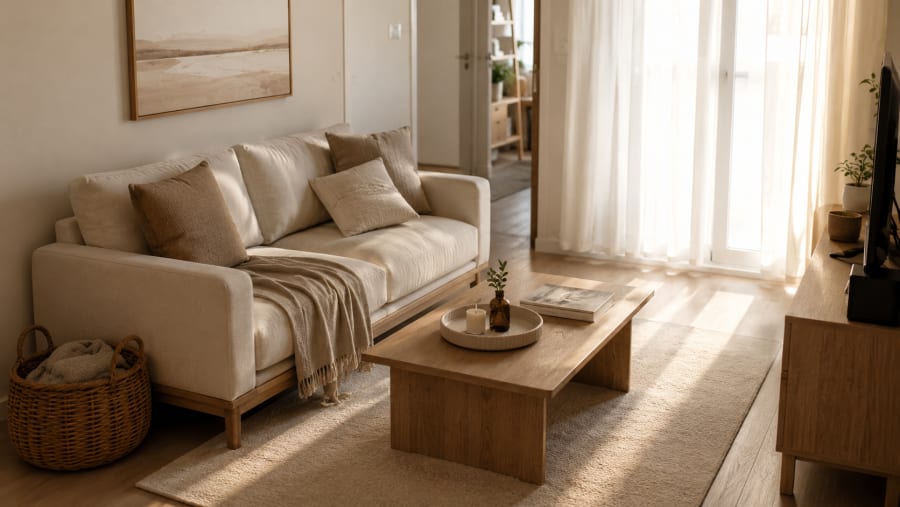
A small home starts to feel heavy when every area is trying to prove itself useful.
Every corner gets a basket.
Every shelf gets decor.
Every wall gets art.
Every surface gets styled.
Every open space gets filled because it feels like a waste to leave it empty.
But empty space is not wasted space.
It is the pause that makes the room feel designed.
This is especially important after you have added smart storage. Once your home has trays, baskets, shelves, benches, and organizers, the next step is editing. Otherwise, even good storage can start to look like more visual weight.
Look at your most visible surfaces again.
Does the coffee table need three objects, or would two feel calmer?
Does the shelf need another vase, or does it need breathing room?
Does the bed need five pillows, or would two pillows and one textured throw feel more restful?
Does the kitchen counter need every daily item visible, or can one small group stay out while the rest moves behind a door?
A small space feels bigger when the eye can move gently through the room without stopping at too many things.
Try removing one item from each visible surface. Not because the item is bad, but because the room may not need it right now. Take one piece off the nightstand. Leave one shelf partly open. Clear one corner of the floor. Let one wall stay simple.
Then step back.
You may notice the room feels quieter almost immediately.
This is the part of small-space styling that makes a home feel more expensive, more mature, and more peaceful. It is not about owning less for the sake of owning less. It is about giving your best pieces room to matter.
A woven basket looks better when it is not surrounded by clutter.
A floating shelf feels lighter when it is not packed from side to side.
A storage bench feels elegant when the floor around it stays clear.
A small kitchen feels calmer when the counter has one intentional zone instead of five scattered ones.
The final layer of organization is not adding more.
It is knowing when to stop.
Because a calm small home is not created by filling every inch wisely.
It is created by letting some inches breathe.
7.Create a Weekly Reset That Feels Easy to Keep
A small home does not need to stay perfect every day.
It only needs a way to come back to calm.
This is where many people get discouraged. They organize a drawer, style a shelf, clear the counter, fold the blankets, and for a few days everything feels lighter. Then life starts moving again. Mail lands by the door. A coffee mug stays on the desk. The bathroom counter collects small things in the morning rush. A throw blanket stays on the sofa. The nightstand slowly begins holding more than it should.
That does not mean your system failed.
It means your home is being lived in.
The goal is not to create a space that never gets messy. That kind of home only exists in photos. A real small home needs storage that can recover quickly. It needs simple places to return things. It needs a weekly rhythm that does not feel like a full cleaning day.
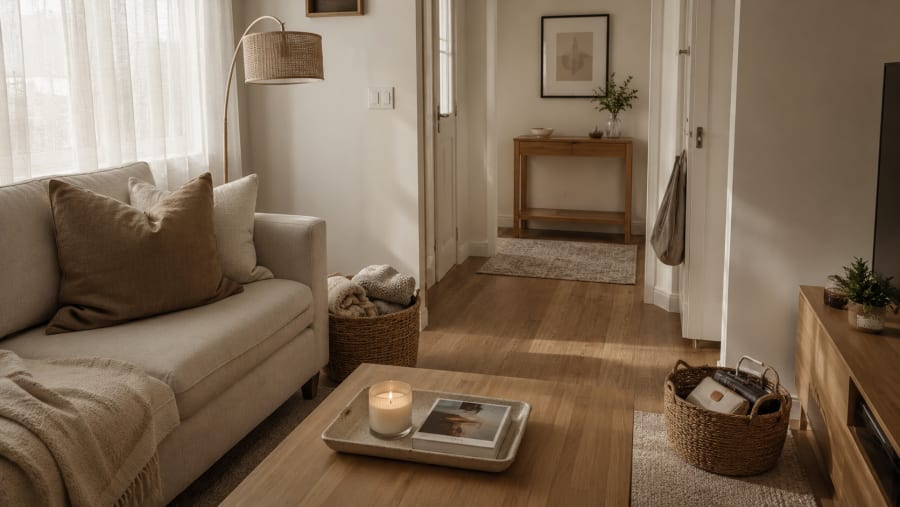
Once a week, give your home a small reset.
Start with the places you see first: the coffee table, kitchen counter, entryway, bathroom vanity, and bedside table. These are the surfaces that shape the mood of the whole home. Clear what does not belong. Put daily items back into their trays, baskets, drawers, or shelves. Fold the throw. Empty the random basket. Return shoes to one place. Move anything from the nightstand that does not support rest.
This reset should feel light, not exhausting.
Set a timer for 15 to 20 minutes and move through the home with one simple question:
Where does this belong?
Not, “Why is my home messy?”
Not, “How did it get like this again?”
Just, “Where does this belong?”
That question keeps the reset gentle. It removes the guilt from organizing and turns it into a small act of care.
You may also notice patterns during this weekly reset. If the same items keep landing in the same wrong place, your home is quietly giving you a design clue. If keys always end up on the kitchen counter, the entryway needs a dish or tray. If blankets always stay on the sofa, the living room needs a basket close enough to use. If skincare returns to the bathroom counter every day, the drawer needs better dividers. If clothes keep landing on a chair, the bedroom needs a smarter storage habit.
Do not fight the way you live.
Design around it.
A calm small home is not a home where nothing moves. It is a home where things have an easy way back. That is what makes storage feel natural instead of forced.
At the end of the reset, leave one visible surface almost empty. Maybe the coffee table. Maybe the nightstand. Maybe the kitchen counter. This one quiet surface will make the whole room feel more open, and it will remind you why the system matters.
Small-space living becomes easier when you stop chasing perfection and start building return points.
The home gets messy.
Then it comes back.
That rhythm is what keeps a small space beautiful.
8.Design Around the Way You Actually Live
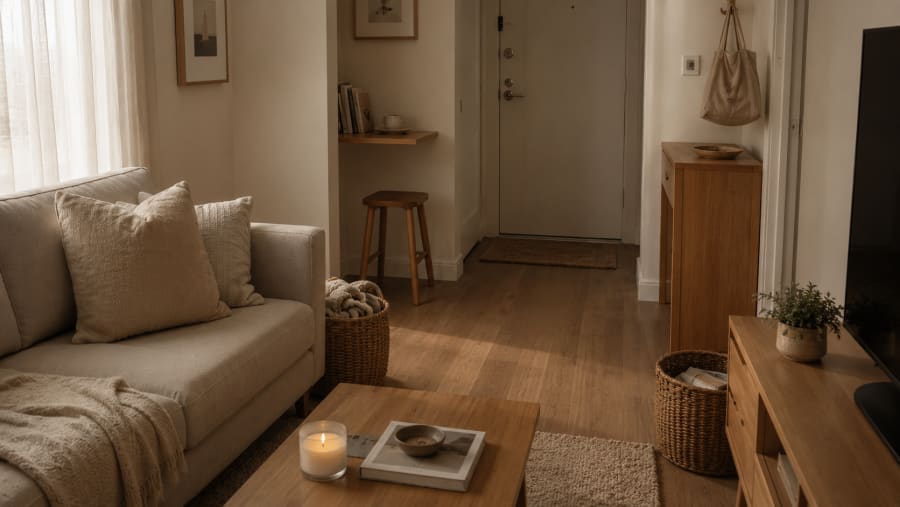
The most beautiful storage system is not the one that looks perfect on the first day.
It is the one you can actually keep using.
This is where small-space organization becomes more personal. A small home does not give you much room for systems that are too complicated, too far away, or too perfect to maintain. If a storage idea asks too much from your daily routine, it will slowly stop working.
And that does not mean you failed.
It means the system was not built around your life.
Pay attention to where clutter naturally lands. That is usually where your home needs a better answer. If keys always end up on the kitchen counter, maybe the entryway tray is not close enough to the door. If blankets always stay on the sofa, maybe the basket needs to sit beside the sofa, not across the room. If skincare keeps returning to the bathroom counter, maybe the drawer is too full or too hard to open in the morning. If clothes land on the bedroom chair every night, maybe the room needs a small bench, hook, or closed basket that feels easier than the chair.
These repeated habits are not random.
They are clues.
Instead of fighting them, design around them.
A calm small home works best when storage sits close to the moment it is needed. The tray belongs where your hand drops the keys. The basket belongs where the blanket is actually used. The floating shelf belongs above the desk that keeps collecting books. The drawer organizer belongs where the morning routine happens, not in a cabinet you never reach for.
This is what makes a storage idea feel natural instead of forced.
It should not ask you to become a completely different person. It should quietly support the way you already move through your home.
That is also what keeps a small home from feeling overly styled. Real homes have patterns. They have routines. They have coffee mugs, chargers, folded blankets, mail, towels, books, bags, and small daily objects that come and go. The goal is not to erase these signs of life. The goal is to give them places that feel calm, easy, and beautiful.
When storage is placed where life actually happens, your home becomes easier to reset.
You stop cleaning the same mess again and again.
You start returning things to places that make sense.
And slowly, the home begins to feel less like a space you are constantly fixing — and more like a space that is quietly working with you.
That is the real transformation of small-space living.
Not a perfect home.
A home that understands your rhythm.
9. Final Thoughts: Let Your Small Home Feel Lighter
A small home does not need to become perfect to feel peaceful.
It only needs to become easier to live in.
That is the real beauty of thoughtful storage. It is not about hiding every sign of life or turning your rooms into empty spaces. It is about making daily routines feel softer. It is about giving the blanket a basket, the keys a tray, the books a shelf, the cleaning bottles a proper place, and the bedroom a quiet surface to return to at night.
Small-space living becomes frustrating when every object feels like it is asking for attention.
But when each thing has a simple place to land, the home begins to feel different. The rooms feel calmer. The floor feels more open. The surfaces feel lighter. Your eye moves through the space without stopping at every little pile. Even the same square footage can begin to feel more generous.
You do not have to change everything at once.
Start with one loud surface. Clear the coffee table. Give your entryway a small system. Add one basket where life actually gets messy. Use one wall better. Edit one shelf. Fix the cabinet you avoid opening. Let one corner stay empty.
Small changes are not small when they remove daily stress.
The goal is not to make your home look like someone else’s. The goal is to make your home work beautifully for the way you live now. Your space can be compact and still feel warm. It can be practical and still feel stylish. It can hold real life and still feel calm.
A beautiful small home is not created by having more room.
It is created by making better room for what matters.
And sometimes, the most powerful transformation is simply this:
less visual noise, better storage, softer routines, and a home that finally feels like it can breathe.
Editor's Note
In a small home, storage works best when it feels like part of the room, not an extra layer added on top of it. Choose pieces that sit close to your daily habits, keep visible surfaces calm, and leave enough open space for the eye to rest. A beautiful small home is not about having less life inside it. It is about giving real life a softer, more organized rhythm.
Curated Finds
Shop This Style
A few thoughtful pieces chosen to support the mood, function, and everyday rhythm of this space.
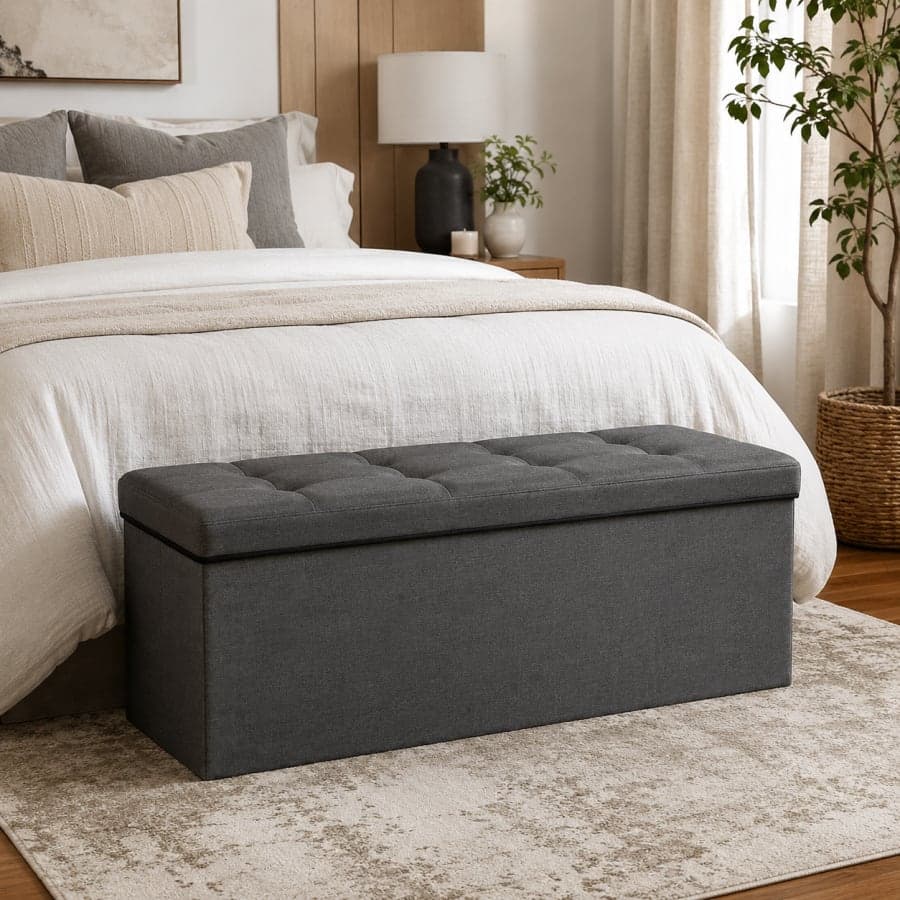
For Flexible Storage
Dark Gray Folding Storage Ottoman Bench
It adds hidden storage and extra seating in one piece, helping a small bedroom feel cleaner, calmer, and more intentionally styled.
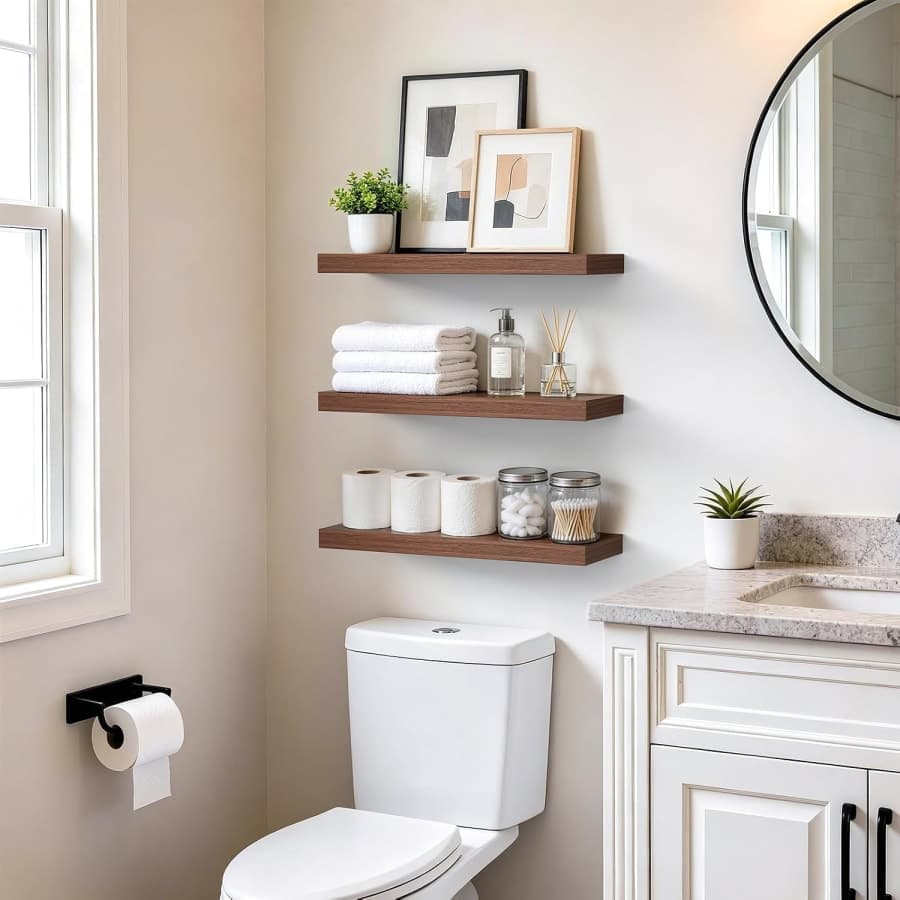
For Vertical Storage
White Floating Wall Shelves
They lift storage off the floor, making a small room feel lighter, more open, and beautifully organized without adding bulky furniture.
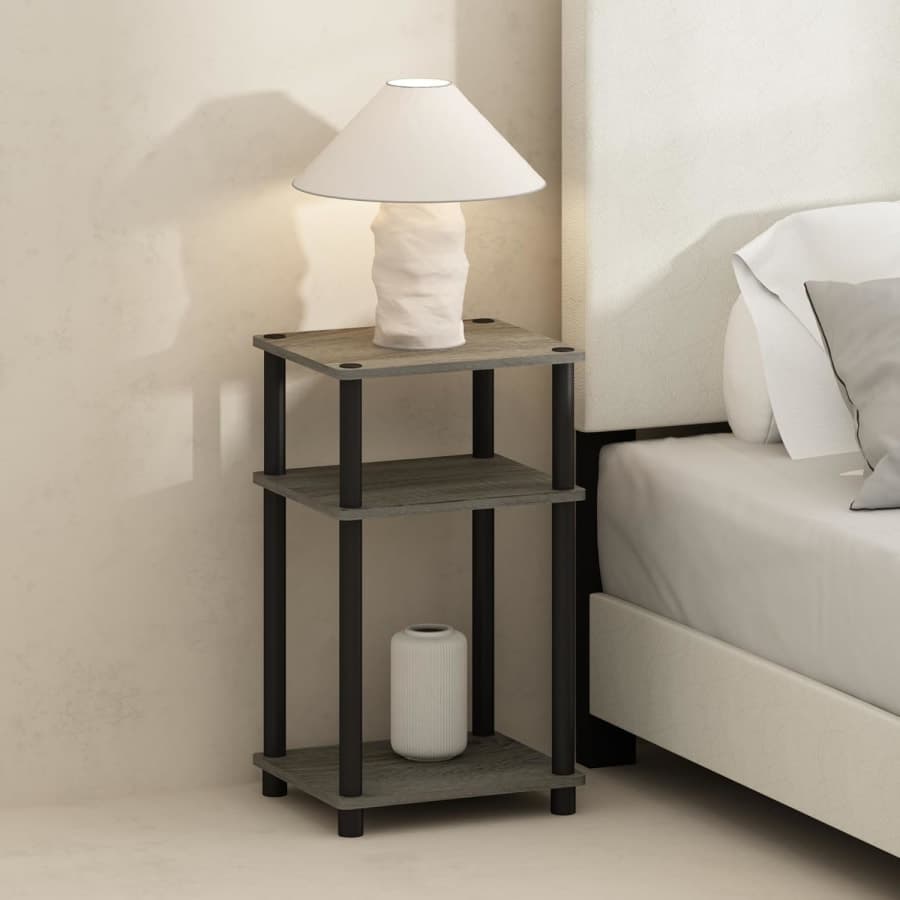
For Bedside Organization
Three Tier French Oak Bedside Table
It keeps nighttime essentials close but visually controlled, making a small bedroom feel calmer, cleaner, and easier to reset.
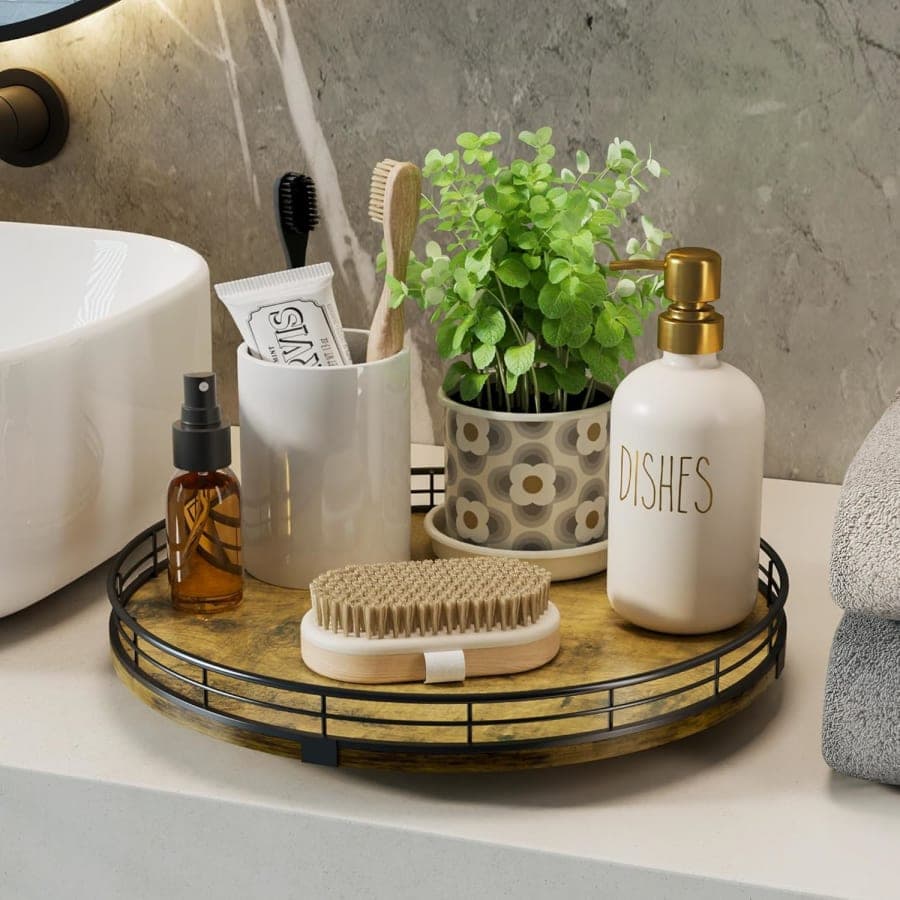
For Easy Access
Rustic Wood Lazy Susan Organizer
It keeps daily kitchen items easy to reach and neatly grouped, making a small counter feel more organized, warm, and intentional.
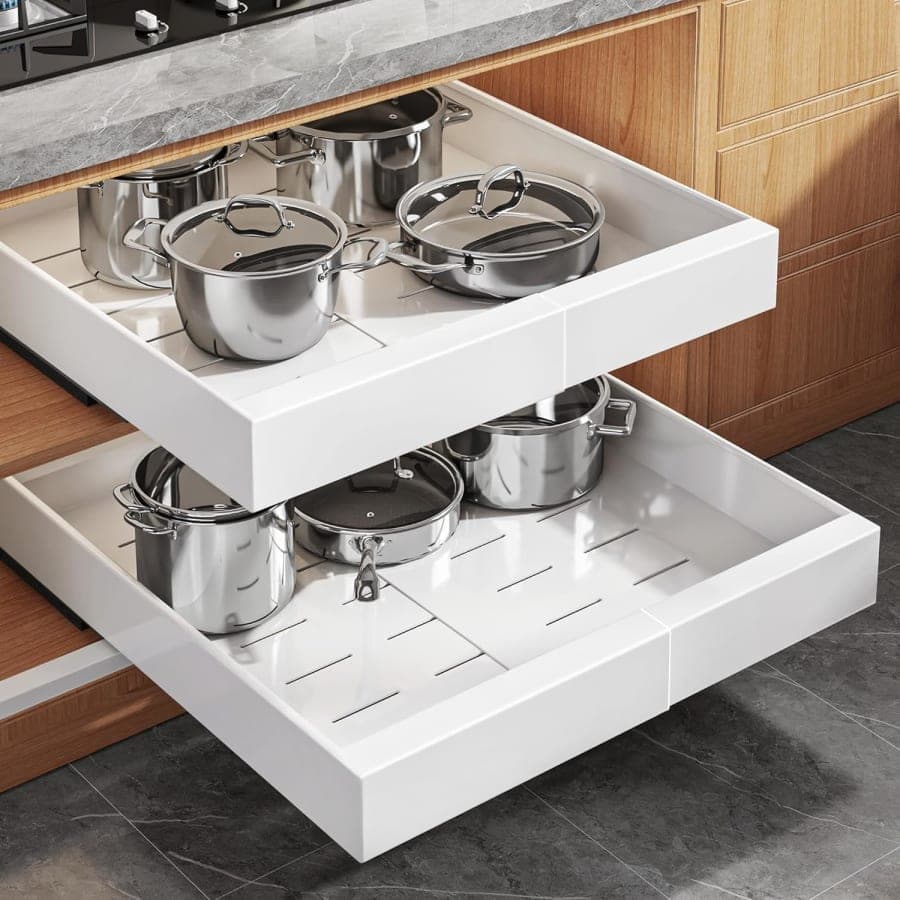
For Hidden Storage
White Pull Out Cabinet Organizer
It turns deep cabinet clutter into easy pull-out storage, keeping cleaning supplies or kitchen essentials visible, reachable, and simple to maintain.

VibeHaven Editorial
Thoughtful notes for creating a home that feels calm, useful, and warmly lived in. We look for simple styling choices, quiet organization ideas, and everyday pieces that add beauty without visual noise.
Category
Organization
Read Time
8 min read